

Hard Work Looks Different in the Winter
There’s a strange guilt that creeps in around training in the winter.
It usually starts quietly. A few missed walks. A shorter workout than planned. A run that turns into a shuffle, or a hike instead of a hard push. Before long, people start telling themselves a story that sounds something like this: I’m losing discipline. I’m letting things slide. I should be doing more.
I’ve been there myself.
This year, that feeling showed up in a very specific way. November was dominated by my Movember fundraiser, 510 kilometres of running in 30 days, averaging 17 kilometres per day, with at least 10 kilometres every single day without exception. It was physically demanding, mentally heavy, and emotionally loaded in ways that are hard to describe unless you’ve committed to something that consumes that much of your bandwidth for a full month.
When Movember ended, my body did not want another training block. It wanted rest. And not the tidy, active recovery kind that still looks impressive on Strava. Real rest. A couple of weeks where running mileage dropped off dramatically (like…zero), where structured sessions took a back seat, and where the priority was simply letting the system settle again.
That’s a little unusual for me. I’m someone who tends to default to movement. But this time, backing off wasn’t a lapse in discipline. It was the discipline.
Now, as December rolls on, my training looks different again. Less road mileage. More time in the gym focusing on strength and intervals. A growing desire to get back out on the trails, even though winter trail conditions often mean more hiking than running. The work hasn’t disappeared. It’s just taken on a different shape.
At the same time, I’m seeing the same seasonal shift play out with clients. As the days get shorter and darker, the enthusiasm for those “little extras” drops off fast. Evening walks that felt effortless in July suddenly feel miserable in December rain and darkness. Weekend hikes lose their appeal when the weather turns cold and grey. It becomes much easier to stay inside and watch another episode of Netflix, or one of those truly awful Christmas movies (which are often filmed right here in Abbotsford).
None of this makes someone weak. It makes them human.
The problem isn’t that winter changes how hard work looks. The problem is pretending it shouldn’t.
Winter Changes the Rules, Whether We Like It or Not
We’re not solar powered, but we’re closer than many of us like to admit.
Reduced daylight hours affect mood, energy, and motivation. That’s not a mindset failure, it’s a physiological and neurological reality. Less light exposure influences circadian rhythms, sleep quality, and the hormones that regulate alertness and mood. Add in cold, rain, and disrupted routines, and it’s no surprise that winter feels heavier.
Food preferences shift too. People crave warmer, heartier meals. Soups, stews, roasts, slow cooked dishes. The appeal of light salads and cold smoothies fades quickly when the temperature drops. Again, this isn’t a lack of willpower. It’s a normal response to seasonal cues.
There’s also a psychological pull toward nesting. Being inside. Slowing down. Conserving energy. Historically, that made a lot of sense. Even now, with modern conveniences, those instincts don’t disappear just because we have gyms, treadmills, and artificial lighting.
Understanding this context matters, because without it, people turn normal seasonal changes into moral failures. They start telling themselves they’re lazy, unmotivated, or falling off track. That story tends to do far more damage than the actual behaviour ever could.
At the same time, acknowledging seasonality doesn’t mean giving yourself a free pass to disappear until spring. Winter is not an excuse to let everything slide. It’s an invitation to adjust expectations, methods, and metrics.
Hard work still matters. It just needs to be defined differently.
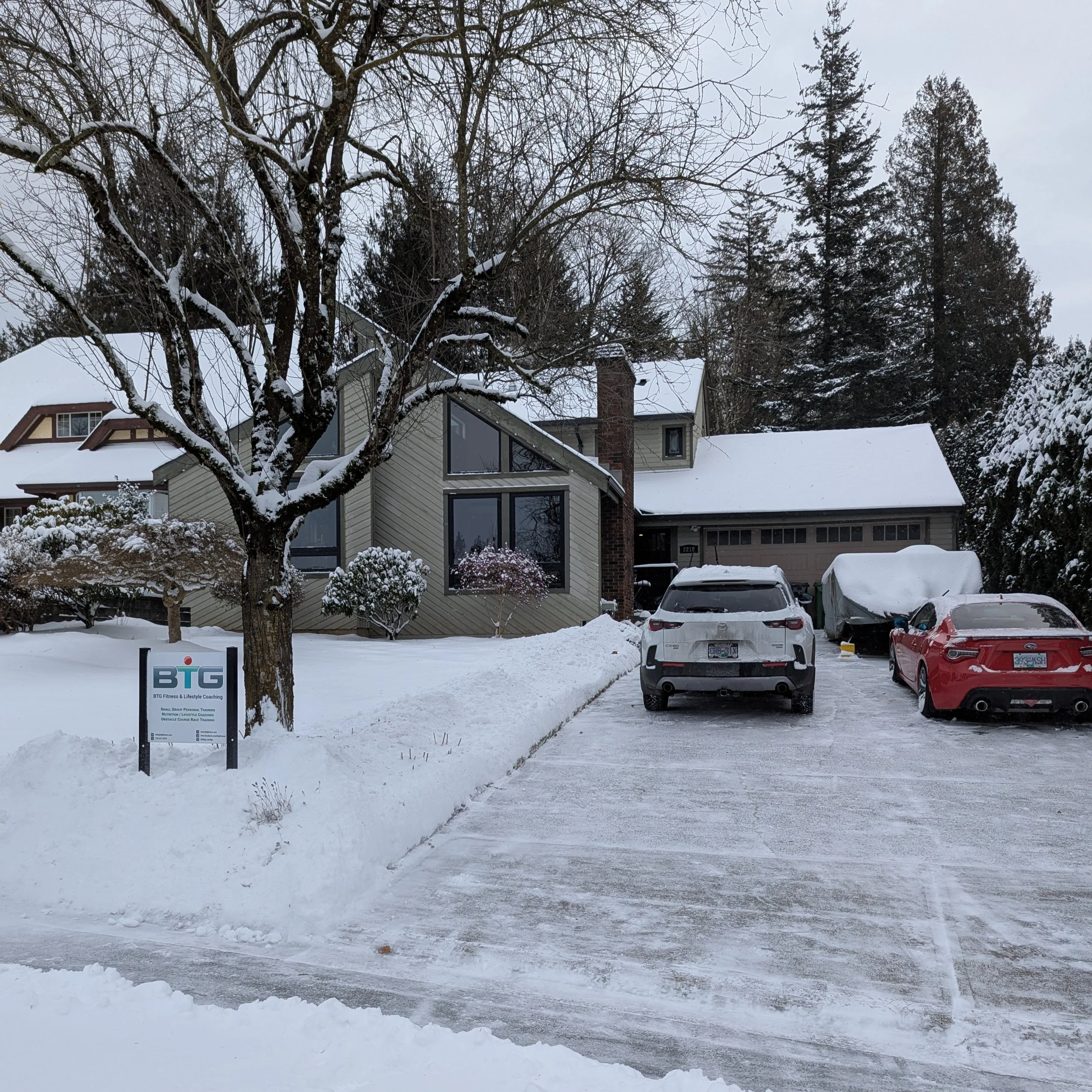
A (rare) snow day at The BTG Garage
What Hard Work Actually Looks Like in the Winter
If summer hard work is about expansion, winter hard work is about preservation.
That distinction alone can relieve a huge amount of pressure.
In the winter months, hard work often looks like doing something consistently, even when that something feels small compared to what you were doing a few months ago. It’s the lunchtime 15 minute walk instead of the hour long evening stroll you enjoyed all summer. It’s showing up to the gym for your regular sessions, even if you leave a little intensity in the tank or dial back the volume.
Maintaining a routine is more than most people manage at this time of year. That’s not hyperbole, it’s observation. Over nearly two decades of coaching, I’ve seen the same pattern repeat itself every winter. The people who keep showing up, even imperfectly, are the ones who feel stable and capable come spring.
Winter is often not the season for chasing personal bests or aggressively pushing fat loss. For many people, it’s a season for mindful maintenance. Holding ground. Keeping strength, mobility, and habits intact rather than trying to force progress against the grain of the environment.
This is also a great time to address the things that get neglected during busier, more performance driven months. The rehab or prehab exercises you’ve been avoiding. The mobility work that keeps getting pushed aside. The foam rolling or massage gun sessions that never seem urgent until something starts to hurt.
There’s nothing wrong with spending part of an evening working on your hips, calves, or upper back while watching a show. If that’s what allows you to stay consistent without burning out, it counts. It ALL counts.
Hard work in winter is quieter. Less dramatic. Less shareable. But it’s no less real.
Adapting Without Quitting
One of the biggest mistakes people make in winter is clinging too tightly to what training looked like in summer.
Outdoor runs become harder and riskier when roads are slick and visibility is poor. Trails that were a joy in August turn muddy, icy, or unstable. Long daylight hours that supported evening activity disappear almost overnight.
Adapting doesn’t mean lowering standards. It means choosing the right tools for the conditions.
That might mean substituting outdoor runs with treadmill sessions, indoor track work, or pool swims. It might mean spending more time on stationary bikes or rowers to maintain aerobic capacity without the same impact or injury risk. For strength focused individuals, winter can be an ideal time to prioritise the gym and build resilience through controlled, repeatable work.
For trail runners and hikers, winter adaptation often means accepting that some outings will be hikes rather than runs. Slower movement. Shorter durations. Different terrain. In places with snow, snowshoeing or Nordic skiing can become powerful tools for maintaining fitness and building character in a different way. Where I live, winter is more often wet and rainy than snowy, so the adaptations look different, but the principle is the same.
Sometimes, adapting means leaning into discomfort as part of the process. Getting outside in poor weather can become a way of reinforcing identity and resilience, as long as it’s done sensibly and safely. Other times, it means acknowledging that today’s best option is an indoor session or a shorter effort.
The key is flexibility without disengagement. Adjust the method, not the commitment.
Compassion Versus Avoidance
This is where things get nuanced, and where a lot of people struggle.
Winter invites compassion. It also invites avoidance. The line between the two isn’t always obvious.
When you don’t feel like training, walking, or doing the thing you’d planned, the most useful question isn’t “Should I push myself?” It’s “Why don’t I want to do this right now?”
Is the answer a genuine constraint, or an excuse? Is it a can’t, or a won’t?
If you’re sick, injured, or genuinely depleted, rest might be the right call. If you’re exhausted from a long day and the thought of a full workout feels overwhelming, what’s the smallest version of that session you could still do?
Could you go for a 10 minute walk instead of an hour? Could you do one or two sets instead of a full workout? Could you stretch, mobilise, or work on problem areas rather than skipping movement entirely?
You can still choose to do nothing. That option is always available. But it’s important to be honest with yourself that it is a CHOICE. When decisions are made consciously, without self deception, they tend to sit better emotionally and create fewer downstream regrets.
This isn’t about guilt. It’s about clarity.

Choice, Identity, and the Long Game
At its core, this conversation isn’t really about winter.
It’s about CHOICE. (There’s that word again…)
Every decision you make around training, movement, and self care moves you either closer to or further from the person you want to be. That doesn’t mean every choice has to be optimal. It does mean choices should be made mindfully rather than emotionally.
Are you choosing comfort because it genuinely serves you today, or because it helps you avoid discomfort you’d rather not face? Are you choosing rest because your body needs it, or because motivation has dipped and avoidance feels easier?
There is seasonality to every health and fitness journey. Sometimes, that season is about progress and expansion. Sometimes, it’s about consolidation and recovery. Being at peace with that rhythm is part of maturity.
What matters most is staying engaged with the process, even when it looks different than you expected or hoped.
What This Looks Like for Me
This might surprise some people, but discipline does not come easily to me. I struggle with it ALL…THE…TIME.
My personal rule is embarrassingly simple:
I try to get out the door (or in the door in the case of the gym). Once I’m there, I take what comes.
Some days, that turns into a long session or even a personal best. Other days it’s 15 minutes of easy movement. Occasionally, it’s nothing more than attacking my legs with a massage gun for 10 minutes while sitting on the couch.
It ALL counts.
The consistency comes from showing up, not from forcing a specific outcome. Over time, those small, unglamorous efforts add up. They preserve capability, confidence, and identity, which are far more valuable than any single workout.
Winter Hard Work Still Counts
Winter has a way of convincing people that they’ve fallen behind.
In reality, winter is often the season where the most important work happens quietly. The work of maintaining routines. The work of adjusting expectations without abandoning standards. The work of choosing consistency over intensity.
Hard work hasn’t stopped just because conditions changed. It’s simply wearing a heavier jacket.
If you can stay connected to the process now, if you can hold the line through the darker months, spring becomes an opportunity rather than a rescue mission. Strength, confidence, and resilience are built over seasons, not in spite of them.

Frequently Asked Questions
Below are some common questions that tend to come up around winter training, motivation, and consistency.
Why is it so much harder to stay motivated to work out in winter?
Shorter days, less daylight, and colder temperatures naturally make your body crave rest and warmth, so feeling less motivated in winter is very common. Lower light exposure can also affect your mood and sleep patterns, which can reduce energy and make workouts feel harder to start. Instead of expecting summer-level motivation, it helps to lower the pressure and focus on small, consistent actions like 10–20 minutes of movement most days. Knowing that this dip is a normal seasonal response, not a personal failing, can make it easier to work with your body rather than fight it.
How can I stay consistent with exercise when it’s dark and cold outside?
Planning is your ally in winter: scheduling workouts like appointments and preparing clothes or equipment the night before reduces the number of decisions you face when you feel low on energy. Shorter, more frequent sessions can be easier to stick with than long, intense workouts, especially when daylight and motivation are limited. Many people find it helpful to move earlier in the day to avoid evening fatigue and to use simple cues like alarms, checklists, or accountability from a friend or group. The goal is not perfection, but maintaining a reliable “baseline” routine you can return to even after off days.
What’s the best way to adjust my workouts for winter without losing progress?
Winter can be a good time to shift from “pushing for big gains” to “maintaining and shoring up foundations” like strength, mobility, and joint health. This might mean lowering intensity slightly, shortening some sessions, or doing more strength, walking, and mobility work instead of high-impact or outdoor endurance training when conditions are harsh. You can still keep a sense of challenge by setting realistic seasonal goals, such as training a certain number of days per week or mastering a specific skill. Thinking in seasons allows you to protect your long-term progress instead of forcing every month to look the same.
How do I know if I’m resting wisely or just being lazy with my workouts?
Rest is useful when it helps you recover, improves your sleep and mood, and allows you to return to movement feeling at least a little more refreshed. Skipping workouts becomes more of an issue when it turns into an open-ended pattern, especially if you feel worse physically and mentally as the days go by. One helpful approach is to decide on “minimums” for tough days, like a 10-minute walk, a light mobility session, or a simple strength circuit. That way you stay engaged without demanding a full workout. If you consistently feel drained or unwell, prioritising recovery and possibly checking in with a health professional is appropriate, not lazy.
Can exercise really help with low mood or seasonal blues in winter?
Regular movement is linked with better mood, less stress, and improved sleep, all of which are especially important when daylight is limited. For people who experience seasonal affective symptoms, activities like walking, cycling, strength training, and mind–body practices such as yoga can help reduce fatigue, anxiety, and low mood. Even moderate sessions a few times per week can support your body’s stress systems and circadian rhythm, which are often disrupted in winter. Exercise is not a replacement for medical care, but it can be a valuable part of a wider strategy that might also include light exposure, social connection, and professional support when needed.
How can I keep my winter workouts safe in cold weather?
Cold conditions can increase stiffness and make slips or strains more likely, so taking extra time to warm up is especially important in winter. Gentle dynamic movements, light cardio, or heated environments help raise body temperature and prepare muscles and joints before higher-intensity efforts. Wearing layers that you can remove as you warm up, protecting extremities, and choosing well-lit, non-icy routes can also reduce risk. On days when conditions are particularly harsh, substituting indoor options (like bodyweight circuits, strength training, or low-impact cardio) can keep you progressing without unnecessary risk.
What are some good indoor workout options when I don’t want to go outside?
Indoor training can be simple and effective, even with limited space or equipment. Options include bodyweight circuits, resistance band work, dumbbell strength sessions, yoga, Pilates, dance workouts, or short interval routines. Many people find guided classes, whether at a gym or online, helpful for structure and accountability, especially when motivation is low. If you struggle to start, commit to just 10 minutes; once you are moving, it often feels easier to continue, but even a short session counts as a win.
How can I stop feeling guilty when my winter routine isn’t perfect?
Guilt often comes from expecting yourself to perform the same way year-round, even though your environment and energy change. It can help to redefine success for winter as “showing up consistently in some form,” instead of always hitting ideal numbers for duration, intensity, or performance. Practising self-compassion and acknowledging that winter is challenging for many people and that imperfect effort still matters can reduce the all-or-nothing thinking that leads to giving up entirely. Reflecting on what is realistically sustainable, rather than what feels impressive, supports both mental health and long-term adherence.
Is winter a good time to try new kinds of training?
Winter can be an excellent time to experiment with new forms of movement, especially if outdoor options are limited or feel unappealing. Trying activities like indoor cycling, strength programs, yoga, dance, or different group classes can keep things mentally engaging and help you discover new skills and preferences. Novelty can reduce boredom and give you fresh reasons to show up, even when motivation is low. As long as you respect your current fitness level and progress gradually, exploring different styles of training can benefit both your body and mindset.
How do I maintain fitness in winter without overtraining or burning out?
In winter, consistency usually matters more than intensity, so building a routine around manageable, repeatable sessions is key. Balancing your week with a mix of strength, lower-intensity cardio, and some mobility or recovery work can help you maintain fitness while giving your body time to adapt. Paying attention to signs like persistent fatigue, poorer sleep, irritability, or recurring aches can alert you that it is time to scale back or add extra rest. Aiming for steady effort over many weeks, rather than chasing constant personal bests, protects both your progress and your enjoyment of training.
Further Reading
Here are a few related pieces that explore consistency, long-term training, and sustainable habits in more depth.
https://www.carecredit.com/well-u/health-wellness/winter-workout-motivation-tips/
https://www.sanantoniobehavioral.com/news/can-exercise-help-seasonal-affective-disorder/
https://www.ceceliahealth.com/tips-to-stay-motivated-with-your-workout-routine-this-winter/
https://www.thebodycoach.com/blog/staying-motivated-in-winter-is-hard-6-tips-to-make-it-easier/
https://www.shredwithshannon.com/how-to-keep-your-workout-motivation-strong-during-the-winter-months
Training Is Only Half the Story
Training is just one part of the equation. What you do in the kitchen matters just as much as what you do in the gym.
If you’re ready to bring your nutrition in line with your goals, join our Free 30-Day Fat Loss Blueprint. It’s a daily email series that walks you through the same core nutrition and mindset principles from The Balanced Burn, giving you clear, practical guidance you can start using right away.
👉 Sign up for free here: www.btgfitness.com/30-day-fat-loss-blueprint