
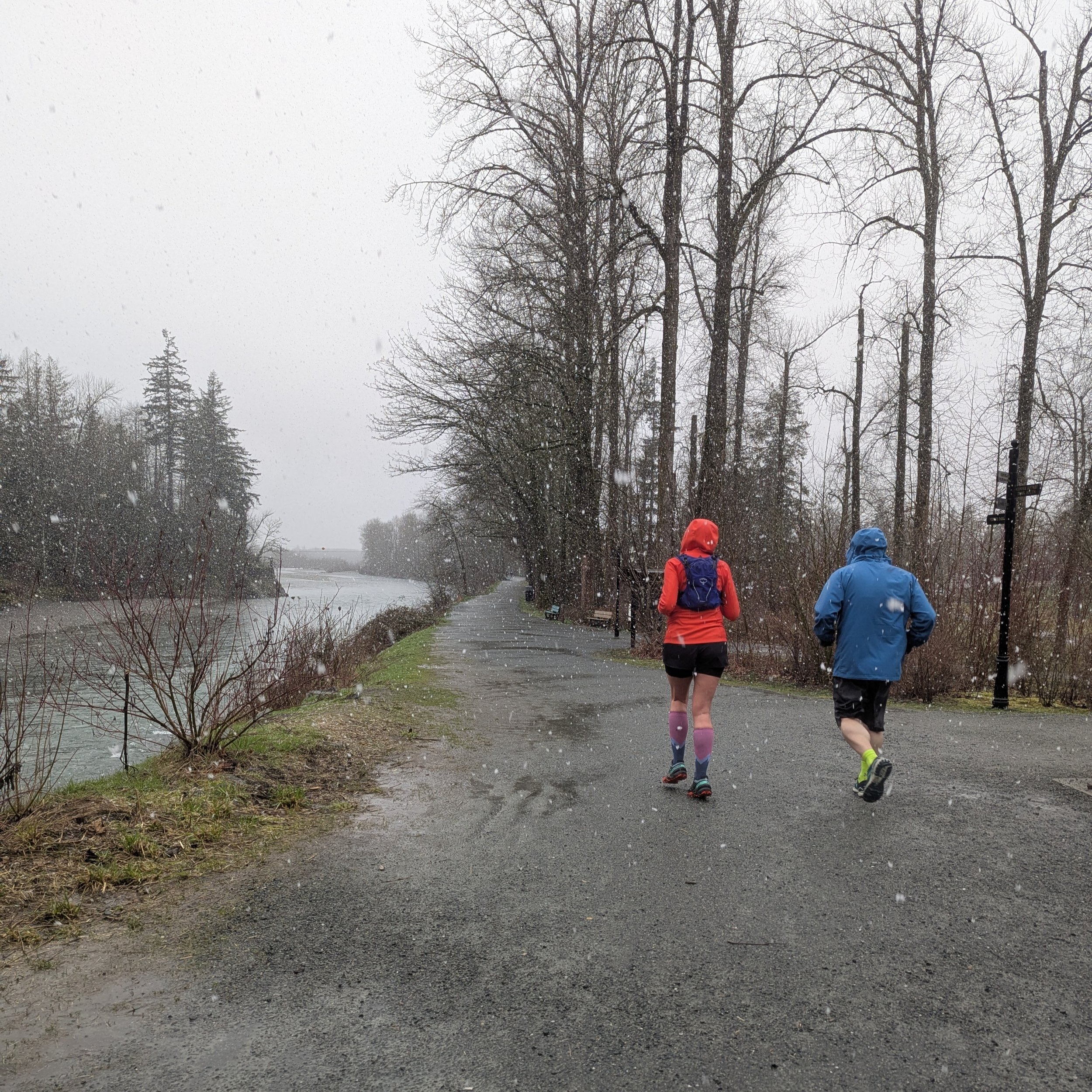
Winter running on the Rotary Trail in Chilliwack
Winter Is Coming… Is There Really an Off-Season for Health?
Winter Is Coming.
Yes, that line has been done to death. I promise I’m not about to turn this into a Game of Thrones parody or pretend I’m standing on a frozen wall warning you about White Walkers flinging kettlebells. But the phrase sticks for a reason. It captures something real.
Every year, like clockwork, the days get shorter, the weather turns, calendars fill up with holiday events, and energy starts to dip. And almost without fail, I hear some version of the same thought from clients and readers:
“It’s kind of an off-season anyway, right?”
Sometimes it’s said casually. Sometimes with guilt. Sometimes with a shrug that tries to pass itself off as acceptance. But underneath it, there’s often a deeper story playing out.
Winter, for many people, becomes a mental permission slip. A permission slip to loosen structure, a permission slip to disengage, a permission slip to tell themselves that nothing really counts again until January.
What’s interesting is that winter itself isn’t the problem. Neither are holidays, family gatherings, comfort food, dark evenings, or slower mornings. Those things are part of life. They’re meant to be enjoyed.
The issue is what winter reveals.
After more than a decade and a half of coaching people through every season imaginable, I’ve noticed something consistent. Winter doesn’t break people’s health and fitness habits. It exposes whether those habits were built on intensity or identity. It shows whether discipline was rigid or adaptable, whether consistency was conditional or embedded, whether health existed to support life… or competed with it.
For some people, winter is just another season. Different rhythms, slightly different routines, a bit more flexibility, but the core remains intact. For others, it becomes a slow slide that doesn’t fully stop until February, followed by a frantic reset attempt that feels heroic for about three weeks and then collapses under its own weight.
The difference isn’t willpower. It’s not motivation. And it certainly isn’t moral fibre. It’s how people understand discipline, consistency, and who they believe themselves to be. Which brings us to the question that’s really worth asking:
Is there actually an off-season for health, or is that idea quietly keeping people stuck in the same loop year after year?
Where the “Off-Season” Idea Comes From (and Where It Goes Wrong)
The idea of an off-season didn’t come from nowhere. In sport, it has a very real and very practical meaning.
Professional athletes don’t train and compete at peak intensity year-round. They cycle their training deliberately. There are phases of higher intensity, phases of recovery, phases focused on skill, strength, conditioning, or rest. The off-season exists to reduce fatigue, address imbalances, and prepare for the next competitive phase.
But here’s the part that often gets missed. An off-season isn’t a free-for-all.
A true off-season is still structured. It’s planned. It’s intentional. It has boundaries. And it serves a purpose.
What most people do in winter looks nothing like that.
Instead, they drift.
Structure loosens, not by design, but by default. Training becomes sporadic. Eating becomes reactive. Sleep slips. Self-talk turns harsh or avoidant. And before long, the story becomes, “I’ll deal with this properly in the new year.”
This is not an off-season. It’s disengagement, and disengagement has a cost.
I don’t say that with judgement. I understand why it happens. Winter encourages comfort. Holidays encourage indulgence. The cultural messaging around this time of year practically invites people to check out, enjoy now, and worry later.
The problem is that “later” almost always arrives carrying shame, regret, and unrealistic expectations. People come into January feeling behind, disappointed in themselves, and convinced they need to swing the pendulum hard in the other direction to make up for lost time. That’s when extreme plans start to look appealing. That’s when discipline becomes punishment instead of support.
Ironically, the off-season people think they’re taking ends up creating the very cycle they’re trying to escape.
The truth is that health doesn’t need an off-season. It needs seasons. And seasons require adaptation, not abandonment.
When Perfection Is the Goal, Structure Is the First Casualty
One of the most consistent patterns I see during winter has very little to do with food or training itself. It’s a thinking pattern.
When perfection is no longer possible, structure gets thrown out entirely.
People look at the calendar and see holiday meals, social events, disrupted routines, darker mornings, and lower energy. Instead of asking, “How do I adapt?”, they quietly conclude, “I can’t do this properly anyway.”
So they stop doing it at all.
This is where holidays become justification rather than context. A holiday meal turns into a holiday week. A missed workout turns into a missed month. A few indulgences turn into a story about having no discipline.
What’s missing in this picture is the idea that consistency does not require perfection. It requires continuity.
Holidays don’t break consistency. The belief that consistency only counts when it’s perfect does.
I’ve watched countless capable, intelligent people sabotage themselves because they couldn’t hit the same standard they held during their strongest seasons. Instead of adjusting the dial, they turned it off, and then they paid for that decision twice.
First, in lost momentum. Second, in damaged self-trust.
When structure disappears, people don’t just lose physical progress. They lose confidence in their ability to show up imperfectly. They reinforce the idea that discipline is something they either execute flawlessly or fail at completely.
That belief is exhausting. And it’s unnecessary.
The people who make it through winter well aren’t doing anything heroic. They’re doing something far more sustainable.
They’re staying in the game.

What Adaptive Discipline Actually Looks Like
Adaptive discipline is not about lowering standards. It’s about applying them intelligently, and it starts with a simple principle:
Control the controllables.
During winter and the holiday season, many things are genuinely outside your control. Weather. Daylight. Social obligations. Travel. Family schedules. Energy levels.
But many things are still firmly within your influence.
Eating Without Turning Every Event Into a Spiral
Most holiday events happen around lunches or dinners. That alone creates opportunity.
You can keep breakfasts consistent. You can keep most weekday meals dialled in. You can approach holiday meals as moments to enjoy, not opportunities to abandon yourself.
One of the most effective tools here is simply slowing down.
Empty your mouth before taking another bite. Put the fork down between bites. Taste your food. Choose what you actually want, not what you feel obligated to eat.
Beverage choice matters too. If alcohol is part of the event, choose something you’re likely to sip rather than consume quickly. Or choose a non-caloric option altogether. Neither choice is virtuous or weak. They’re just strategic.
Then, and this part matters, get back on track at the next meal. Not Monday. Not January. The next meal.
That single habit does more to prevent holiday spirals than any rule set ever will.
Training That Fits the Season You’re In
Winter makes outdoor activity less convenient for many people. That’s reality.
So adapt.
Plan weekend midday hikes instead of weekday morning runs. Lean a little more into indoor cardio or intervals during the week. Maintain strength training even if volume or intensity dips slightly.
And importantly, don’t skip meaningful life events because you feel chained to the gym.
Health should support your life, not compete with it.
Training consistency does not require identical sessions year-round. It requires continued engagement.
Mindset That Respects Biology and Reality
Lower energy in winter is normal for many people. It’s not a character flaw. It’s not laziness. It’s not a moral failing.
Human beings evolved in seasonal environments. Expecting identical output year-round ignores that reality.
Adaptive discipline means working with the body and energy you have on the day.
Be kind to yourself. But do not confuse kindness with abandonment.
There is a wide middle ground between rigid control and unchecked indulgence. That middle ground is where sustainable progress lives.
Identity Is the Difference Maker
After years of watching people navigate winter in very different ways, I’ve noticed something telling.
The people who handle winter well don’t rely on motivation. They rely on identity.
They don’t believe they need to be perfect to make progress. They don’t panic when things slow down. They don’t interpret maintenance or small setbacks as failure.
They trust themselves. They believe, often quietly, “I can enjoy this without losing myself.”
Their self-talk reflects that belief. One night out does not undo months of effort. One indulgent meal does not define who they are. One missed workout does not negate their identity as someone who trains.
Health, for them, is not a performance. It’s part of who they are.
By contrast, people who struggle through winter often carry a much harsher internal narrative. They see any deviation as proof that they lack discipline. They tell themselves they always fall apart this time of year. They expect failure before it even happens.
That belief becomes self-fulfilling.
Identity shapes behaviour far more powerfully than rules ever could.

Winter icicles on McKee Peak's south side
The Quiet Cost of Getting This Wrong
When people slide into a seasonal off-season mindset, the cost extends well beyond weight gain or lost fitness. The biggest damage is psychological.
Each winter of disengagement reinforces a negative identity. “I don’t have discipline.” “I can’t stay consistent.” “I always mess this up.”
Those beliefs don’t disappear in January. They walk straight into the new year with you.
That’s when people try to compensate with intensity. Strict rules. Aggressive timelines. All-or-nothing plans that feel productive but are almost impossible to sustain.
When those plans inevitably crack, the identity takes another hit. Failure wasn’t evidence of a flawed plan. It becomes evidence of a flawed person, and the loop continues.
What’s tragic is how unnecessary this cycle is.
A more moderate, adaptable approach throughout winter builds confidence quietly. It strengthens self-trust in the background. It teaches people that they can live fully and still show up for themselves.
By the time January arrives, there is no need for a dramatic reset. There’s simply a gentle turn of the dial.
That is what real progress looks like.
There’s No Off-Season for Identity
Life is not meant to be optimised year-round. It’s meant to be lived.
Winter is slower for many people. It’s darker. It’s heavier. It’s filled with social rituals that revolve around food, connection, and rest. None of that is a problem.
The problem arises when winter becomes an excuse to step away from yourself entirely.
There is no off-season for identity.
You don’t stop being someone who values their health because the weather changes. You don’t stop being disciplined because the calendar fills up. You don’t lose all progress because you choose enjoyment over rigidity for a few weeks.
The goal is not to “win” winter. The goal is to stay in the game.
To adapt instead of disengage. To enjoy without self-sabotage. To carry yourself through the season with integrity, not intensity.
If winter has historically been the season where things fall apart for you, that’s not a verdict. It’s information.
It’s an opportunity to ask a better question this year.
Not, “How do I stay perfect through winter?”
But, “Who do I want to be when conditions aren’t ideal?”
That answer matters far more than any plan.

Frequently Asked Questions
Below are answers to some of the most common questions people ask about staying consistent with health, training, and eating during winter and the holiday season.
Question: Is it okay to take a break from working out in winter?
Yes, it is usually okay to ease up in winter, as long as “break” does not mean doing nothing at all for months. Many experts point out that strength and endurance can be maintained with a smaller “minimal dose” of exercise if intensity is kept up, so dialing things down is different from checking out completely. Light movement like brisk walks, short strength sessions, or home workouts can hold your progress and support mood when days are darker. If you have a medical condition, are pregnant, or haven’t exercised in a long time, talk to a healthcare professional before changing your routine.
Question: Will I lose all my progress if I miss workouts for 1–2 weeks?
Missing a week or two of workouts does not erase your fitness, especially if you have been consistent for months beforehand. Research suggests measurable strength and endurance losses typically show up after several weeks of complete inactivity, and even then, you tend to regain lost ground faster than when you first started. A short break can actually help joints, tendons, and motivation recover, especially in a demanding season. When you come back, start with slightly lighter loads or shorter sessions for a week to let your body and nervous system readjust. If you are rehabbing an injury or illness, follow your clinician’s guidance rather than pushing to “make up” missed sessions.
Question: How much holiday weight gain is normal, and should I worry?
Studies show that average holiday weight gain is usually much smaller than people fear, often around half a kilo or about a pound, though some individuals gain more and some even lose weight. A lot of what you see on the scale right after big meals is water, food volume, and glycogen, not pure body fat. Instead of panicking, zoom out and look at trends over several weeks, not single days. Focus on habits like regular movement, mostly balanced meals, and reasonable portions, and let your body weight settle as routine returns. If you have a history of disordered eating or obsessive weighing, consider working with a therapist or dietitian to keep tracking from becoming a source of harm.
Question: How can I enjoy holiday food without ruining my progress?
You can enjoy holiday meals and still support your goals by focusing on how you eat, not just what you eat. Eating slowly, putting your fork down between bites, and checking in with hunger and fullness cues usually leads to more satisfaction with less overeating. Prioritise protein and some vegetables first, then add the special foods you really love instead of grazing mindlessly on everything. It also helps to arrive at events having eaten a normal meal, not “saving up” all day, which often backfires. If you struggle with bingeing or emotional eating, consider professional support; holiday pressure and food rules can make those patterns worse without skilled help.
Question: What’s the minimum routine I need to stay healthy over winter?
For most adults, guidelines suggest aiming for around 150 minutes of moderate activity per week (like brisk walking) or about 75 minutes of more vigorous work, plus two sessions of muscle-strengthening for the major muscle groups. In busy, dark months, that can look like 20–30 minutes of walking most days and two short strength workouts using bodyweight, dumbbells, or resistance bands. Short “movement snacks” of 5–10 minutes also add up across the day. Sleep, basic stress management, and mostly balanced meals support your immune system and energy as much as the workouts themselves. If you have chronic health conditions or are new to exercise, ask a doctor or qualified professional what “minimum effective” means for you personally.
Question: Why do I feel so tired and unmotivated to exercise in winter?
Shorter days and less sunlight can disrupt circadian rhythms and lower exposure to bright light, which may reduce energy, affect sleep quality, and in some people contribute to seasonal affective disorder. Colder weather and more time indoors also change routines, making it harder to rely on outdoor activities or spontaneous movement. Planning earlier bedtimes, getting morning light when possible, and moving some activity indoors can all help. Gentle goals, like “10 minutes of movement,” often feel more doable when motivation is low but still keep the habit alive. If you notice persistent low mood, heavy fatigue, or loss of interest in things you usually enjoy, consider speaking with a mental health professional to check for depression or related conditions.
Question: How do I restart my workouts after the holidays without going to extremes?
Think of January as a gentle reset, not a punishment. Start by returning to the schedule and types of activity you were doing before the break, but at about 70–80% of the previous volume or intensity for a week or two. This helps manage soreness, protect joints, and rebuild confidence. Choose two or three core habits (like going to the gym twice a week, walking on non-gym days, and having a balanced breakfast) and let those stabilize before adding more. Avoid crash diets or multi-hour daily workouts, which are hard to sustain and can increase injury or rebound risk. If you have heart, joint, or metabolic conditions, check with a doctor before significantly ramping up training.
Question: How do I stop all-or-nothing thinking about fitness in winter?
All-or-nothing thinking turns a missed workout or a big holiday meal into “I’ve blown it,” which often leads to giving up completely. Try reframing each choice as a single data point, not a verdict on your identity or your whole week. Ask, “What’s one helpful thing I can still do today?” (like a 10-minute walk, stretching, or adding some vegetables to the next meal). Setting flexible ranges instead of rigid rules (for example, “2–4 workouts this week” instead of exactly 5) makes success more achievable in a busy season. If perfectionism, guilt, or compulsive exercise patterns are strong, working with a therapist or coach trained in cognitive or acceptance-based approaches can offer extra tools.
Question: What should I do if I get sick or injured during winter?
Sickness and injury are signals to adjust, not to push harder. For mild illnesses like common colds, many guidelines suggest using the “above the neck” rule: light movement may be okay if symptoms are only in the head, but fever, chest symptoms, or body aches usually call for full rest. After a break, ease back in with shorter, less intense sessions and see how your body responds over 24 hours. For injuries, pain that changes your movement pattern, worsens during activity, or lingers afterward is a cue to stop and seek professional assessment. Never use exercise to “push through” chest pain, difficulty breathing, dizziness, or severe pain; those are reasons to seek urgent medical care.
Question: What if winter triggers emotional eating or stress eating for me?
Winter can bring financial stress, family dynamics, and less daylight, all of which can nudge people toward using food for comfort or distraction. Start by noticing patterns without judgment: when, where, and what you tend to reach for, and what you are feeling just before. Building in other soothing options, like calling a friend, taking a warm shower, or going for a short walk gives your brain more than one way to cope. Regular meals with enough protein and fiber also reduce the intense hunger that can fuel binge episodes. If eating feels out of control, is tied to guilt and secrecy, or is affecting your health, reach out to a therapist or dietitian experienced in emotional or binge eating, especially if you have or suspect an eating disorder.
Further Reading
If you’d like to explore related articles and ideas in more depth, here are a few recommended pieces that expand on consistency, discipline, identity, and sustainable habits through the winter:
https://www.rnz.co.nz/life/wellbeing/is-it-ok-to-exercise-less-in-winter
https://www.carecredit.com/well-u/health-wellness/winter-workout-motivation-tips/
https://www.hsph.harvard.edu/nutritionsource/mindful-eating/
https://www.who.int/news-room/fact-sheets/detail/physical-activity
https://health.gov/sites/default/files/2019-09/Physical_Activity_Guidelines_2nd_edition.pdf
https://www.ymcaquebec.org/en/news/5-ways-to-motivate-yourself-to-stay-active-in-the-winter
https://www.thebodycoach.com/blog/staying-motivated-in-winter-is-hard-6-tips-to-make-it-easier/
https://www.sanantoniobehavioral.com/news/can-exercise-help-seasonal-affective-disorder/
Interested in Going Deeper?
If you’d like to explore these ideas further, including how to build consistency without burnout and how to navigate seasons of lower energy without losing momentum, you may find our Free 30-Day Fat Loss Blueprint helpful. It blends mindset, nutrition, and habit-building principles from The Balanced Burn into practical, realistic daily guidance.